
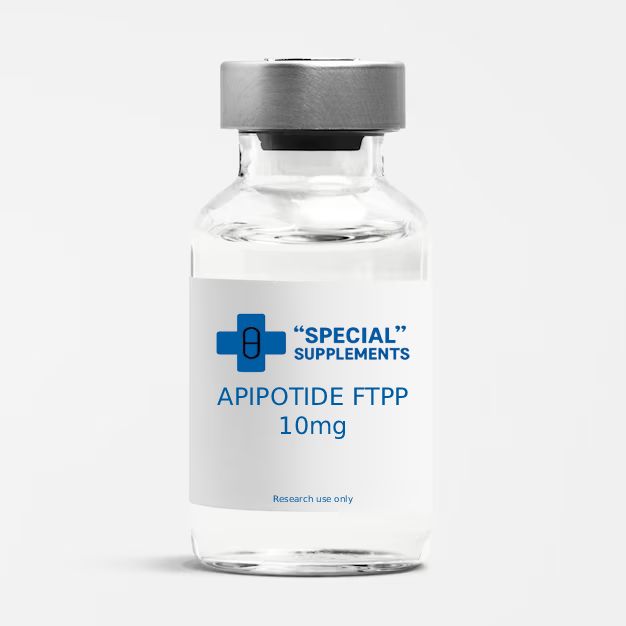
Description
Adipotide Peptide (FTPP)
Adipotide, also known as FTPP (Fat-Targeted Proapoptotic Peptide) or Prohibitin-Targeting Peptide 1 (Prohibitin-TP01), is a synthetic peptide studied for its potential proapoptotic activity. Researchers suggest that Adipotide may promote targeted cell apoptosis, particularly in specific types of cells such as adipocytes. It is believed to act by targeting prohibitin, a protein involved in regulating cell formation, metabolism, and inflammation.
Originally, Adipotide was developed to investigate its potential effects on cancer cells by inhibiting blood supply to tumors, thereby inducing cell death. However, subsequent findings suggested that the peptide exhibited a similar effect on adipose (fat) tissue instead. This unexpected discovery led to growing interest in Adipotide’s potential for studying mechanisms related to fat metabolism and obesity management.
—
**Overview**
Adipotide was created by combining a naturally occurring peptide sequence (CKGGRAKDC), isolated via phage display technology, with a proapoptotic sequence. The resulting compound was designed to target prohibitin (PHB1), a protein found on the surface of white adipose tissue. By binding to prohibitin, Adipotide may disrupt the blood supply to fat cells, leading to their programmed death (apoptosis).
In addition to prohibitin, researchers suggest that Adipotide may also interact with another receptor called annexin A2 (ANX2). Together, prohibitin and ANX2 are believed to form a complex with the fatty acid transporter CD36, facilitating fatty acid uptake into adipocytes. Disruption of this complex by Adipotide could interfere with fatty acid transport and metabolism within white adipose tissue. In animal models lacking ANX2, researchers observed smaller adipose cells (white adipose tissue hypotrophy) and reduced fatty acid uptake, indicating the importance of this interaction in fat storage and metabolism. These findings have led scientists to propose that Adipotide might indirectly promote the use of stored fat as an energy source.
Early preclinical studies in primate models also suggested that Adipotide administration may reduce insulin resistance, pointing to possible metabolic benefits beyond fat reduction.
—
**Chemical Makeup**
Molecular Formula: C152H252N44O42
Molecular Weight: 2611.41 g/mol
Other Known Titles: FTPP, Prohibitin-Targeting Peptide 1
—
**Research and Clinical Studies**
**Adipotide (FTPP) Initial Research**
Adipotide’s mechanism of action is thought to depend on its ability to selectively bind to prohibitin on the surface of endothelial cells within the vasculature of white adipose tissue. The compound’s proapoptotic activity is attributed to its fusion with the D(KLAKLAK)₂ sequence, which may disrupt mitochondrial membranes after cell entry, leading to apoptosis in targeted cells.
In an early study, Adipotide was administered daily to primate models for four weeks without changes to their diet or exercise routine. The results showed an approximate 11% reduction in body weight and a 39% decrease in total fat deposits compared to baseline. Mild, reversible renal effects were observed in some test groups, as indicated by temporary increases in creatinine levels. Researchers also noted a potential reduction in food intake, suggesting Adipotide might influence appetite or satiety pathways, although the mechanisms behind this remain unclear. Overall, the findings suggest Adipotide may promote weight loss by targeting the vasculature of adipose tissue, but additional studies are required to understand its full biological effects.
—
**Adipotide (FTPP) and Malignant Cells**
Early cancer research involving Adipotide focused on identifying vascular markers in both normal and malignant tissues. Scientists isolated peptides and proteins expressed differently in tumor vasculature and found several ligand-receptor interactions unique to cancer cells. Among these, integrin α4/annexin A4 and cathepsin B/apolipoprotein E3 were identified as common ligand-receptor pairs across multiple tissue types. Researchers proposed that Adipotide’s potential activity on malignant cells may be linked to these specific vascular targets, though this area of research remains exploratory.
—
**Adipotide (FTPP) and Diabetes**
In studies using obese murine models, Adipotide was observed to improve glucose tolerance and lower triglyceride levels within just a few days of administration, even without significant changes in body weight. This suggests a mechanism that may act independently of weight loss. Improvements in glucose homeostasis were accompanied by reduced insulin levels and enhanced metabolic efficiency.
Microarray analyses of white adipose tissue in treated models revealed altered gene expression patterns related to mitochondrial function, oxidative phosphorylation, and amino acid degradation. Adipotide appeared to reverse some of the metabolic disruptions caused by a high-fat diet, suggesting potential modulation of mitochondrial activity. Furthermore, despite expectations of elevated serum lipids following adipose tissue reduction, triglyceride levels actually decreased in treated models. These metabolic effects appeared distinct from food intake or adipokine changes (such as adiponectin and resistin), implying a more direct influence on cellular energy metabolism.
Alterations in acylcarnitine profiles were also reported, including decreased short- and medium-chain acylcarnitines and increased long-chain species. This shift may reflect a change in mitochondrial fatty acid and amino acid processing, potentially contributing to Adipotide’s observed effects on glucose regulation and metabolic function.
—
**Summary**
Adipotide (FTPP) is a synthetic, fat-targeted proapoptotic peptide that has been studied for its ability to selectively induce cell death in adipose tissue. Research suggests the peptide may:
* Target prohibitin and annexin A2 receptors on adipose vasculature
* Reduce adipocyte mass by disrupting blood supply to fat cells
* Improve glucose tolerance and insulin sensitivity in animal models
* Influence mitochondrial metabolism and fatty acid processing
While preclinical results are promising, further research is required to fully understand Adipotide’s mechanisms of action, potential benefits, and safety profile.


Reviews
There are no reviews yet.