
Description
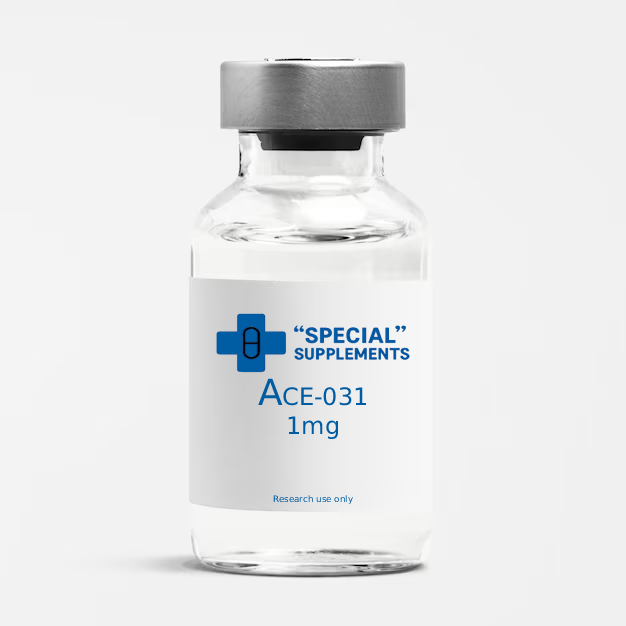
**ACE-031 Peptide**
ACE-031 peptide, also known as ActRIIB-IgG1 peptide, is considered a potential myostatin inhibitor. Structurally, it is a fusion compound consisting of the activin receptor type IIB (ACV2RB) and recombinant immunoglobulin IgG1 FC, a form of antibody. Research suggests that this soluble peptide may block circulating myostatin, preventing it from binding to native ACV2RB receptors and thereby allowing for enhanced muscle growth.
Myostatin, or growth and differentiation factor 8 (GDF8), is part of the transforming growth factor-beta (TGF-β) superfamily and is a negative regulator of skeletal muscle growth. It has no significant effect on cardiac or smooth muscle tissue. Discovered in 1997, myostatin was identified for its muscle growth inhibitory role in comparative murine studies. Overexpression of myostatin may lead to reduced muscle mass, while inhibition of myostatin appears to promote hypertrophy.
ACE-031 is believed to function by binding circulating myostatin and other related ligands within the TGF-β superfamily. As a result, ACV2RB receptors in muscle cells remain uninhibited, which may promote muscle hypertrophy and an increase in skeletal muscle tissue. The peptide may also have potential positive effects on metabolism, fat storage, and bone density.
—
**Chemical Makeup**
Molecular Formula: C3418H5188N928O1062S38
Molecular Weight: 77,489.82 g/mol
Other Known Titles: Soluble Activin Type IIB Receptor (ActRIIB-IgG1-Fc)
—
**Research and Clinical Studies**
**ACE-031 and Muscle Cell Hypertrophy**
A double-blind, placebo-controlled study investigated the potential of ACE-031 on muscle tissue and included a pharmacokinetic analysis. The half-life (T½) was estimated to be between 10 to 15 days. Results from this study indicated an increase in muscle mass following a single exposure to ACE-031. Measurements taken after 29 days using dual-energy X-ray absorptiometry (DEXA) and MRI showed a 3.3% increase in total body lean mass and a 5.1% increase in quadriceps femoris muscle volume. Researchers noted: “Statistically significant increases in mean total body lean mass (3.3%; P = 0.03, by DXA) and thigh muscle volume (5.1%; P = 0.03, by MRI) were observed at day 29.” Additionally, changes in serum biomarkers suggested possible improvements in bone and fat metabolism.
—
**ACE-031 and Fat Metabolism**
Research has indicated that myostatin expression may be elevated in obesity models. In murine studies, increased levels of myostatin and its receptor ActR2B were associated with reduced muscle mass and increased fat mass. Overexpression of myostatin correlated with muscle reduction and increased fat accumulation, whereas depletion of myostatin reduced age-related fat gain and improved metabolic profiles.
In mice on a high-fat diet, the absence of myostatin was linked to decreased fat accumulation, possibly due to:
1. Upregulation of lipolysis and fatty acid oxidation enzymes (CPT1a and CPT2), which enhance fat metabolism.
2. Promotion of brown (beige) fat formation, converting white adipose tissue into energy-burning brown fat.
In similar high-fat diet models, ACE-031 administration appeared to prevent or reduce obesity, indicating a potential role in regulating fat metabolism.
—
**ACE-031 and Muscle Contractile Force**
Further research suggests ACE-031’s effects may extend beyond myostatin inhibition. By potentially reducing oxidative stress in muscle tissue, ACE-031 may improve muscle force generation, preserve energy, and promote oxidative respiration. In murine models, ACE-031 exposure was associated with a 33% increase in muscle volume without changing fiber distribution. Basal oxygen consumption increased by 22%, and energy expenditure rose by 23%. During exercise testing, models treated with ACE-031 showed a 40% increase in maximum contractile force and a 24% increase in total force output compared to controls. Specific force and fatigue resistance were unchanged, though mitochondrial ATP production appeared altered, suggesting a shift in energy metabolism.
—
**ACE-031 and Bone Density**
Another study explored ACE-031’s effects on bone tissue in murine models of Duchenne Muscular Dystrophy (DMD), which involves muscle degeneration and increased fracture risk. The study found that ACE-031 increased both body and muscle weights in sedentary and active groups. Micro-CT scans showed an 80% increase in bone volume and a 70% increase in trabecular number in femurs, along with a 20–30% rise in vertebral bone mass. Histological data indicated reduced osteoclast numbers and increased expression of osteoblast markers. These findings suggest ACE-031 may reduce bone resorption and enhance bone formation. The researchers noted: “Increased bone mass in femurs translated into enhanced bone strength in biomechanical testing as the maximum force and stiffness were significantly elevated.”
—
**Summary**
ACE-031 appears to function as a broad-spectrum myostatin and TGF-β ligand inhibitor. Experimental findings suggest it may:
* Promote skeletal muscle growth and hypertrophy
* Improve fat metabolism and energy balance
* Enhance bone density and strength
While preclinical and early clinical results are encouraging, further research is necessary to fully understand its long-term safety, efficacy, and potential therapeutic applications.


Reviews
There are no reviews yet.