
Description
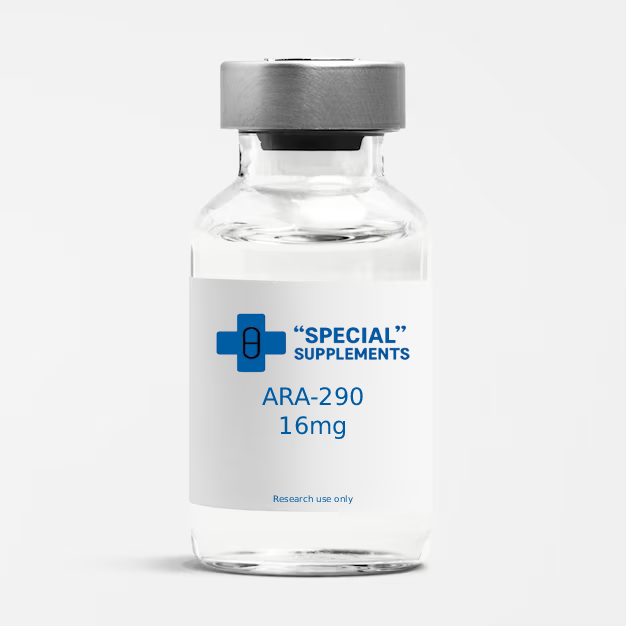
ARA-290 Peptide
ARA-290 peptide, also known as cibinetide and helix B surface peptide (HBSP) in scientific literature, is an 11 amino acid chain derived from the beta domain of the naturally occurring protein erythropoietin (EPO). This part of the EPO sequence is considered to assist in tissue regeneration and repair without stimulating red blood cell production. Scientists suggest that while the primary function of EPO is to promote red blood cell formation, the beta domain—and consequently ARA-290—may instead possess regenerative, anti-inflammatory, anti-nociceptive, and other related properties.
**Overview**
Research suggests that once tissue injury occurs, a tissue-protective receptor (TPR) pathway may be activated. This receptor consists of a beta receptor unit (CD131) and a subunit from the EPO receptor, jointly referred to as the innate repair receptor. It is hypothesized that ARA-290 binds to this receptor and may attenuate nerve-related and allodynia-led pain (nociception). Researchers propose that ARA-290 acts primarily through this innate repair receptor-mediated pathway.
**Chemical Makeup**
Molecular Formula: C51H54N16O21
Molecular Weight: 1257.3 g/mol
Other Known Titles: PH-BSP
**Research and Clinical Studies**
**ARA-290 and Nociception**
Transient Receptor Potential (TRP) channels are believed to play a major role in pain signaling, including thermal, chemical, and mechanical stimuli. One such channel, TRPV1, may trigger the release of neuropeptides that generate pain signals. A 2016 study suggested that ARA-290 might increase the activation threshold of TRPV1, potentially blocking its action and preventing neuropeptide release. Researchers studying neurons from murine dorsal root and trigeminal ganglia observed that ARA-290 appeared to reduce the neurons’ response to capsaicin (the active component in chili peppers) without affecting other heat sensors. This suggests that ARA-290 may specifically target TRPV1 channels, potentially increasing the amount of capsaicin required to activate them. The findings support ARA-290’s potential role in modulating nociception and reducing pain sensitivity.
**ARA-290 and Retinal Ischemia**
A recent study suggested that ARA-290 may protect endothelial blood vessels and help mitigate retinal ischemia in experimental models of ischemic retinopathy. Researchers explored whether ARA-290 could reduce inflammation in the ischemic retina and improve vascular regeneration through endothelial colony-forming cells (ECFCs). The study found that ARA-290 enhanced ECFC survival under oxidative stress and improved their reparative capacity in the ischemic retina. Systemic ARA-290 administration also appeared to lower pro-inflammatory cytokine levels such as IL-1β and TNF-α. These findings indicate possible anti-inflammatory and vascular repair-supporting properties of ARA-290 in retinal ischemia models.
**ARA-290 and Inflammatory Cytokine Cells**
In a study examining pancreatic islet transplantation (PITx) models, ARA-290 was evaluated for its potential anti-inflammatory and cell-protective effects. Transplanted murine models receiving ARA-290 showed reduced islet cell damage and decreased pro-inflammatory cytokine secretion (IL-6, IL-12, and TNF-α). The peptide also appeared to inhibit apoptosis-related enzymes and support cell survival by possibly activating the PI3K-Akt and JAK2-STAT5 pathways while reducing NF-κB-mediated inflammation. Researchers concluded that ARA-290 may protect pancreatic islets from cytokine-induced damage and help mitigate inflammatory responses following transplantation.
**ARA-290 and Tissue Protection**
ARA-290 is believed to bind to tissue-protective receptors (TPRs), helping preserve tissue function by reducing inflammation and cell death. Unlike erythropoietin, ARA-290 appears to lack cardiovascular or hematopoietic effects, making it a potential candidate for promoting tissue repair, wound healing, and regeneration while minimizing unwanted systemic effects.
**ARA-290 and Immunomodulation via TPR Pathway**
The TPR pathway, once activated, is expressed on immune cells such as macrophages. ARA-290 may limit the release of inflammatory molecules like interleukin-6 (IL-6), potentially reducing the severity of immune-mediated conditions.
**ARA-290 and Adaptive Immunity**
Research suggests that ARA-290 may influence antigen presentation by dendritic cells, potentially modulating adaptive immune responses. This action could help prevent transplant rejection and improve the success of transplantation experiments in laboratory models.
Reviews
There are no reviews yet.