
Description
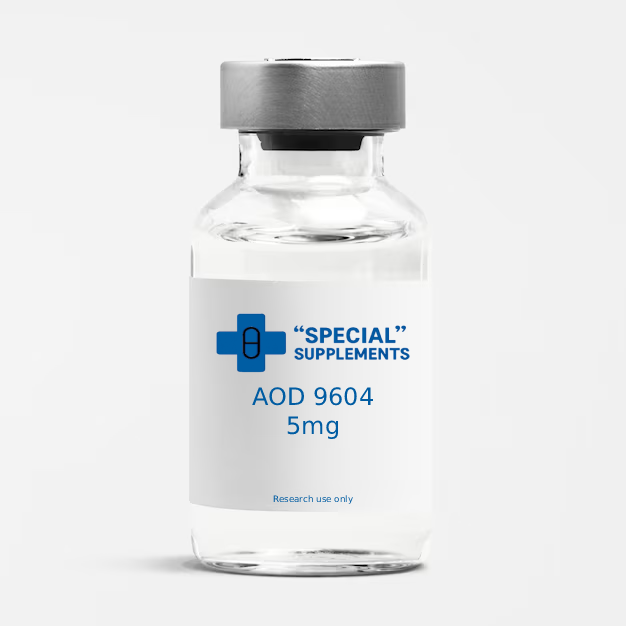
AOD 9604 Peptide
AOD 9604 is a synthetic peptide analog of human growth hormone (hGH) that was designed to study fat metabolism, weight regulation, and tissue regeneration. The peptide consists of the last 16 amino acids (176–191) of hGH, with a modified N-terminus containing a tyrosine residue for improved stability. It is commonly referred to as GH Fragment 176-191 or Tyr-hGH Fragment 177-191.
AOD 9604 is considered the lipolytic region of hGH, meaning it may influence fat-metabolizing pathways without affecting growth hormone’s other biological actions, such as insulin-like growth factor-1 (IGF-1) stimulation. Researchers have proposed that different segments of the hGH molecule have distinct biological effects — for instance, the N-terminal region may enhance insulin action, while other mid-sequence fragments show mitogenic activity. The 176-191 region appears to be primarily responsible for fat metabolism.
—
**Overview**
AOD 9604 was developed in the 1990s as part of a research effort to explore compounds with the potential to mimic the fat-burning effects of growth hormone while avoiding unwanted side effects. Studies in animal models have suggested that AOD 9604 may promote lipolysis, the breakdown of stored fat into free fatty acids and glycerol.
The peptide may influence beta-adrenergic receptor activity, particularly the beta-3 adrenergic receptor (β3-AR), which plays an important role in fat metabolism. Some research indicates that AOD 9604 could increase β3-AR RNA expression in adipose tissue, potentially making fat cells more responsive to lipolytic signaling. While the peptide does not appear to act directly through β3-AR, its observed effects on receptor sensitivity and energy expenditure suggest a role in enhancing fat oxidation and metabolism.
Scientists believe that the 176-191 fragment may stimulate lipolysis and inhibit lipogenesis (fat storage) without elevating IGF-1 levels, distinguishing it from native growth hormone.
—
**Chemical Makeup**
Molecular Formula: C78H123N23O23S2
Molecular Weight: 1815.12 g/mol
Other Known Titles: GH Fragment 176-191, Tyr-hGH Fragment 177-191
—
**Research and Clinical Studies**
**AOD 9604 and Lipolytic Activity**
Early studies using obese murine models reported that AOD 9604 administration for two weeks led to noticeable reductions in body weight and fat mass. These effects correlated with increased levels of β3-adrenergic receptors in fat tissue. Follow-up studies in genetically modified mice lacking β3-AR suggested that AOD 9604 may still enhance fat metabolism through other mechanisms, including increased energy expenditure and fat oxidation.
In another study conducted in 2000 using obese Zucker rats, daily administration of AOD 9604 for 19 days reportedly reduced body weight by over 50% compared to control groups. The peptide appeared to increase lipolytic activity in adipose tissue without impairing insulin sensitivity.
**AOD 9604 and Obesity**
A 2004 human clinical trial investigated AOD 9604 in 300 obese subjects over 12 weeks. The study reported consistent, modest weight reduction, as well as minor improvements in cholesterol levels and glucose tolerance. Although further research is needed, these findings suggest that AOD 9604 may have potential applications in obesity-related studies.
**AOD 9604 and Cell Regeneration**
In 2015, a study on 32 rabbits examined AOD 9604 alone and in combination with hyaluronic acid to evaluate its potential role in cartilage repair. The group receiving both AOD 9604 and hyaluronic acid exhibited the least cartilage degeneration, suggesting possible synergy between the compounds.
Additional in vitro research indicates that AOD 9604 may promote the differentiation of adipose-derived mesenchymal stem cells into bone cells and stimulate chondrocytes to produce proteoglycan and collagen. These effects could point to a role in tissue regeneration, including cartilage and muscle repair. AOD 9604 may also encourage myoblast differentiation, potentially aiding in muscle recovery and maintenance.
**AOD 9604 and Cancer Research**
Preliminary laboratory studies have investigated AOD 9604 in the context of tumor cell research. Researchers have explored its use as a targeting agent to improve the delivery and effectiveness of anti-cancer drugs such as doxorubicin. In one study using chitosan nanoparticles loaded with both doxorubicin and AOD 9604, enhanced drug accumulation and cytotoxicity were observed in breast cancer cell lines compared to doxorubicin alone. This suggests that AOD 9604 may help increase targeted drug delivery and reduce unwanted side effects on healthy tissues.
—
**Summary**
AOD 9604 is a synthetic fragment of human growth hormone studied for its potential roles in fat metabolism, tissue regeneration, and cellular research. Findings from preclinical and limited human studies suggest that the peptide may:
* Promote lipolysis and increase fat oxidation
* Support weight and fat reduction without affecting IGF-1
* Improve cartilage and tissue repair in experimental models
* Enhance the targeted activity of certain chemotherapeutic agents
Reviews
There are no reviews yet.